
Tips for Keeping Your Herbal Apothecary Organized
A well-organized apothecary saves time, prevents waste, and makes your herbal practice safer. The goal is simple: you want to find what you need in seconds, know what’s fresh, and keep everything stored in a way that protects potency.
1) Organize by “how you think,” not how Pinterest thinks
Choose a system that matches how you reach for herbs. Common, practical options:
-
By body system (digestive, respiratory, nervous, musculoskeletal, women’s health)
-
By herbal action (nervines, carminatives, bitters, demulcents, diuretics, vulneraries)
-
By form (dried herbs, tinctures, glycerites, oils, salves, essential oils, powders)
-
By frequency of use (daily staples in front; occasional herbs higher/back)
Many people do a hybrid: form first, then action/system within each form.
2) Create “zones” and keep them visually distinct
Give each category a home:
-
Dried herb zone (jars/bags)
-
Tincture zone (dropper bottles)
-
Tea blending zone (scales, scoops, filters)
-
Topical making zone (oils, waxes, salve jars)
-
Bulk storage zone (backstock, not mixed with daily-use jars)
-
Reference zone (materia medica, recipes, labels)
Even a small shelf works better when each section has a purpose.
3) Use clear, consistent labeling (this is your safety backbone)
Every container should have, at minimum:
-
Common name + Latin name
-
Plant part (leaf, root, flower, bark, seed)
-
Form (dried, powder, tincture 1:5, infused oil, etc.)
-
Date received or made
-
Source/vendor
-
Optional but helpful: Lot/batch number, organic status, and key cautions
If it’s not labeled, it’s not usable—especially if you teach students or make products.
4) Standardize your jar and bottle choices
Uniform containers stack better, label better, and reduce chaos:
-
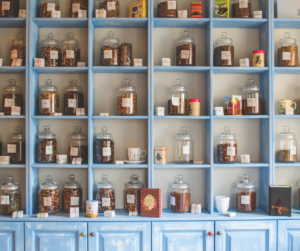
Use 2–3 jar sizes for dried herbs (example: 4 oz, 8 oz, 16 oz)
-
Use consistent tincture bottle sizes (1 oz and 2 oz are common)
-
Use the same label size and placement across everything
Standardization makes your apothecary look tidy even when you’re busy.
5) Store herbs correctly to protect potency
-
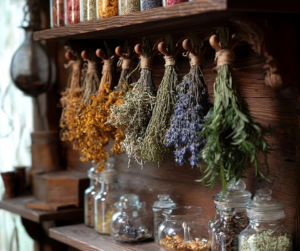
Keep dried herbs cool, dark, and dry
-
Avoid storage above the stove, near a dishwasher, or in direct sunlight
-
Use airtight glass for most herbs; keep very aromatic herbs extra sealed
-
Keep powders and resins tightly closed (they pull moisture)
6) Rotate stock with a simple “first in, first out” method
To prevent old herbs lingering:
-
Put new jars behind old jars
-
Or mark lids with a bold year
-
Schedule a “freshness check” monthly or quarterly
7) Track inventory in a simple way (even if you hate spreadsheets)
Use whatever you’ll actually keep up with:
-
A notebook with a running list
-
A phone note with “buy again” staples
-
A simple spreadsheet with: herb, form, amount, supplier, date, reorder point
Set reorder points for your core herbs to avoid running out mid-formula.
8) Keep a “daily staples” basket
Create a grab-and-go area for your most-used herbs and supplies:
-
Your top 10–20 dried herbs
-
Measuring tools, tea filters, labels, alcohol, glycerin
-
Gloves and sanitizer for clean handling
This prevents you from having to dig through everything for the same items every week.
9) Create a formula log + a batch log (even for home use)
If you make blends or tinctures regularly, track:
-
Formula name
-
Ingredients and ratios
-
Date made
-
Notes on taste, effect, and adjustments
If you sell products, add batch numbers and label copies for compliance.
10) Use “kits” for specific purposes
This is one of the easiest ways to stay organized:
-
Respiratory kit: mullein, thyme, elderflower, marshmallow, honey, tea filters
-
First aid kit: calendula, plantain, arnica (topical), salve jars, bandages
-
Sleep kit: lemon balm, chamomile, passionflower, tincture bottles
Kits reduce mental load and keep you consistent.
11) Don’t store everything together—separate by risk
-
Separate external-use-only herbs clearly (e.g., arnica, certain essential oils)
-
Keep “high caution” herbs on a distinct shelf with red labels
-
Keep essential oils locked away from children/pets and clearly marked
12) Do a quick “apothecary reset” routine
A small routine prevents clutter from becoming chaos:
-
5 minutes after each session: close jars, wipe surfaces, return scoops
-
Weekly: refill staples, empty trash, check moisture packets if used
-
Monthly: inventory scan + discard anything questionable
13) Make it teachable
If you want your apothecary to be easy for someone else to use:
-
Put a printed “map” of the shelf on the inside of a cabinet door
-
Keep a master list of where things live
-
Label shelves with category names
14) Decide on freshness standards and stick to them
Herbs don’t “go bad” in one day, but they do lose potency. A practical guideline many herbalists use:
-
Leaves/flowers: best within ~1 year
-
Roots/barks/seeds: often ~2 years (sometimes longer if stored well)
-
Powders: lose potency faster; buy smaller amounts more often
Use smell, color, and vitality as your final check.

Disclaimer
Disclaimer Blog
The information presented on the Heart of Herbs Herbal School/Demetria Clark websites is for educational purposes only. Heart of Herbs Herbal School/Demetria Clark Education LLC makes neither medical claims nor intends to diagnose or treat medical conditions. Links to external sites are for informational purposes only. Heart of Herbs Herbal School/Demetria Clark neither endorses them nor is in any way responsible for their content. Readers must do their own research regarding the safety and usage of any herbs, recipes, or supplements.
Affiliate Disclosure
Some posts contain affiliate links. When you click on these and make a purchase the cost is the same for you, but we earn a small commission that helps me to provide scholarships to students. We only promote products that we know our clients have liked themselves.
Heart of Herbs Herbal School is a Amazon affiliate. As an Amazon Associate, we earn from qualifying purchases.