Basil: The Royal Herb Your Family Needs to Know
If you have spent any time in my courses at Heart of Herbs or flipped through Herbal Healing for Children, you know I believe deeply in keeping things simple, accessible, and rooted in knowledge that actually serves real families. Basil is one of those herbs that checks every single box. It grows on your windowsill, it sits on your dinner table, and it has been quietly doing serious work in traditional medicine systems for thousands of years. I want you to see this everyday herb the way I see it, not just as a kitchen staple, but as a genuine plant ally for your home.
Latin Name and Botanical Identity
Basil’s Latin name is Ocimum basilicum, and it belongs to the Lamiaceae family, the mint family, which tells you right away that you are in good company. The word basilicum has a Greek origin, meaning “kingly plant” or “royal herb.” This plant has been honored and respected across cultures for millennia, and once you get to know it well, you will understand exactly why.
There are over 60 recognized cultivars of Ocimum basilicum, ranging from sweet Genovese basil to Thai basil, lemon basil, purple basil, and beyond. This variety is part of what makes basil so fascinating to work with. Each cultivar offers slightly different flavor profiles, essential oil compositions, and uses (Simon et al., 1999).
Habitat and Growing Conditions
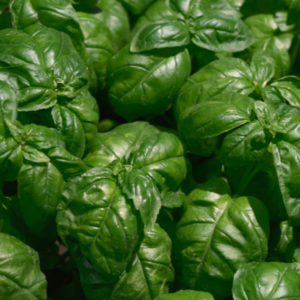
Basil is native to tropical and subtropical regions stretching from Central Africa through Southeast Asia, including the Indian subcontinent, Southeast Asia, and parts of Central and South America (Zakaria et al., 2008). It thrives in warm, sunny climates with well-drained soil. In temperate zones like much of North America, we grow it as an annual, though in warmer Mediterranean or tropical climates, it can behave as a short-lived perennial.
This is not a plant that tolerates cold. Basil wants warmth, full sun, and consistent moisture. It grows best between 70 and 90 degrees Fahrenheit and will sulk or bolt if temperatures drop too low. The optimal germination temperature for basil seeds falls in the range of about 34 to 39 degrees Celsius. If you are starting basil from seed indoors, give it a warm spot and good drainage, and it will reward you generously. Another simple way to implement Basil into your arsenal is to buy a fresh Basil plant from a grocery store, keep it on your windowsill in the kitchen and grab a few leaves as needed.
Basil is widely cultivated commercially in countries including India, Morocco, France, Hungary, Greece, Egypt, and Indonesia. In Italy, the Ligurian region produces the famous Genovese basil, a protected designation of origin product that forms the heart of Pesto Genovese and is one of the most beloved culinary traditions in the world. It’s also always been a fan-favorite in our home!
Fun Facts Worth Knowing
I have been teaching herbal medicine for almost thirty years, and basil is one of those plants that still surprises people, especially with how accessible and robust it is. Here are a few things that tend to delight my students.
Basil has a royal reputation for a reason.
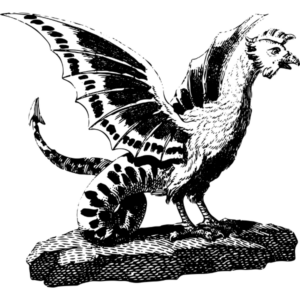
The name itself tells you this plant was considered precious. Some historians believe it was used in the production of royal perfumes in ancient Greece and Rome. The Latin name has even been confused historically with the word basilisk, because basil was believed to be an antidote to the legendary creature’s venom.
It is a companion planting powerhouse.
Basil planted near tomatoes is said to improve their growth and flavor. At the same time, it grows poorly alongside rue and sage. Companion planting is one of those topics I love weaving into conversations with families, because it reminds us that plants have relationships and preferences just like we do.
Basil repels insects.
The essential oil of Ocimum basilicum has demonstrated insect-repelling properties, including potential toxicity to mosquitoes, and has been shown to repel Frankliniella occidentalis and Thrips tabaci, making it a useful pest deterrent in the garden. A pot of basil near your back door does more than smell wonderful.
The seeds are mucilaginous.
When soaked in water, basil seeds swell and develop a gel-like coating called basil seed mucilage or basil seed gum. This substance has been studied as a thickening, stabilizing, and emulsifying agent, and its used in food products throughout South and Southeast Asia.
Basil has been sacred to Hindu tradition for thousands of years.
Holy basil, or Tulsi (Ocimum tenuiflorum), is a close relative and is planted in the courtyards of many Hindu families, said to bring peace and purify the environment. In ancient tradition, basil was sacred to the gods Krishna and Vishnu, and it was said that every Hindu slept with a basil leaf on his breast.

Traditional and Modern Uses
In my book Aromatherapy and Herbal Remedies for Pregnancy, Birth, and Breastfeeding, I discuss the importance of understanding not just what an herb does but also how it has been used across time and cultures. Basil fits that philosophy beautifully.
Digestive Support
Sweet basil has been valued for centuries as a digestive herb. It is antispasmodic, carminative, and stomachic, meaning it helps ease flatulence, stomach cramps, colic, and indigestion. In 475 Herbal and Aromatherapy Recipes, I include formulations that lean on basil alongside other digestive herbs for this exact purpose. When my boys were growing up, a simple basil, lemon, stevia, and cucumber water was a good way to introduce it into the diet, and make it easily consumed, especially on a hot day.
Antimicrobial Properties
Research has consistently supported basil’s antibacterial, antifungal, and antiviral properties. The essential oil has been shown to have activity against both gram-positive and gram-negative bacteria, and studies have demonstrated antifungal and antiviral effects as well. The key active constituents include linalool, eugenol, eucalyptol, and estragole, each contributing to these properties in different ways.
Blood Sugar and Blood Pressure
Some studies suggest that basil extracts may help reduce high blood sugar levels and have a brief blood pressure-lowering effect, possibly due to their eugenol content, which can block calcium channels in the body. This is a promising area of research, though I always encourage people to work with their health care providers regarding chronic health conditions.
Anti-inflammatory and Antioxidant
Basil is rich in polyphenols, phenolic acids, and flavonoids. These compounds contribute to basil’s antioxidant activity, and research has explored its potential anti-inflammatory effects. Understanding an herb’s actions helps you think clearly about when and how to use it appropriately.
Skin Care
Research published in 2011 suggested that topical basil extracts may help improve skin hydration and reduce roughness and wrinkling. This is a lovely application, and basil-infused oils make beautiful additions to home skin care preparations.
Aromatherapy
In modern aromatherapy, basil essential oil is regarded as energizing, particularly for the heart and mind, and is thought to relieve sorrow and mental fatigue. As I have discussed before, the keyword associated with basil oil in aromatherapy practice is often described as “clearing.” That resonates with me. Basil has a quality that feels both grounding and enlivening.
Traditional Remedy Scope
Historically, basil has been used in Ayurvedic and traditional Chinese medicine for respiratory and gastrointestinal conditions, including fevers, coughs, the flu, asthma, bronchitis, diarrhea, earaches, menstrual irregularities, and arthritis. According to John Gerard’s The Herball, published in 1579, basil was used to treat heart infirmities, digestive issues, headaches, and melancholy. It was also used in formulations to reduce inflammation and act as a diuretic.
Recipes for Our Home Apothecary and Kitchen
These recipes are adapted from my teaching at Heart of Herbs Herbal School and reflect the kind of practical, family-centered herbal medicine I have taught for decades. The Herbal Formulation Guide and Recipes is a great resource if you want to go deeper with your formulation work.
Simple Basil Digestive Tea
This is a gentle, everyday tea that supports digestion after meals. Safe for most adults and older children, though I always recommend consulting with a qualified herbalist or your health care provider before giving any herbal preparation to young children or those with health conditions.
Ingredients:
- 1 tablespoon fresh basil leaves (or 1 teaspoon dried)
- 8 ounces boiling water
- Optional: a slice of fresh ginger, a little raw honey to taste
Instructions:
Place the basil leaves in a mug or heatproof jar. Pour boiling water over them and cover. Steep for 10 to 15 minutes. Strain, sweeten if desired, and drink slowly after a meal. This tea is aromatic and surprisingly soothing. Feel free to experiment with adding a small amount of chamomile or lemon balm to deepen the calming effect.
Basil Infused Olive Oil
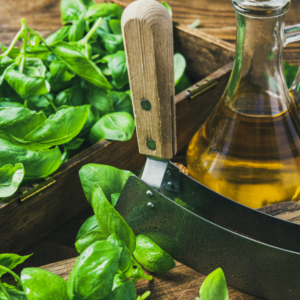
This is one of my favorite preparations, and I make it every summer when my basil is coming in strong. Use it in cooking, drizzle it over salads, or incorporate it into skin care preparations.
Ingredients:
- 1 cup loosely packed fresh basil leaves, washed and thoroughly dried
- 1 cup quality extra virgin olive oil
Instructions:
This is critically important: the basil must be completely dry before you begin. Any moisture can cause spoilage. Allow the washed leaves to air dry completely, or pat them very well with a clean towel and let them sit for several hours. Once dry, gently bruise the leaves with your hands to help release their oils. Place the leaves in a clean, dry glass jar. Pour the olive oil over them, making sure all the leaves are fully submerged. Seal and store in a cool, dark place for 2 to 4 weeks, shaking gently every few days. Strain through cheesecloth and store the finished oil in the refrigerator for up to two weeks. Always smell before use. When in doubt, throw it out.
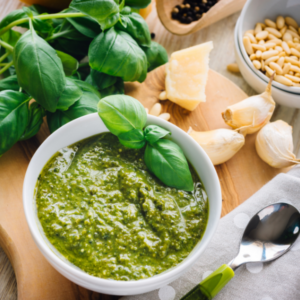
Classic Fresh Pesto
Pesto is one of the most joyful ways to use a large basil harvest, and I have made countless batches over the years for my family. This is a traditional preparation that also delivers basil’s antioxidant and antimicrobial properties deliciously.
Ingredients:
- 2 cups fresh Genovese basil leaves, packed
- 1/2 cup good-quality olive oil
- 1/3 cup pine nuts (lightly toasted)
- 3 cloves of garlic
- 1/2 cup freshly grated Parmesan or Pecorino Romano
- Salt and black pepper to taste
Instructions:
Combine the basil, garlic, and pine nuts in a food processor and pulse several times. With the processor running, slowly drizzle in the olive oil until the mixture is smooth. Add the cheese and pulse briefly to combine. Season with salt and pepper to taste. Use immediately, or press a layer of plastic wrap directly onto the pesto to prevent browning, then refrigerate for up to a week. It also freezes beautifully in ice cube trays for winter use.
A Note on Safety and Education
Herbal medicine is people’s medicine. That is something I have believed since I first started learning as a young woman, and it is a theme that runs through everything I have written, from Herbal Healing for Children to the curriculum at Heart of Herbs. Basil as a culinary herb is widely considered safe for most people at normal food amounts. Medicinal amounts, however, deserve more attention. Basil essential oil should never be taken internally without professional guidance, and as with any herb, people who are pregnant, nursing, or managing a chronic health condition should consult with a qualified health care provider before using it medicinally.
Education is everything. The more you know about an herb, the more respectfully and effectively you can use it. I am not an expert on everything, but I do know that knowledge, care, and a genuine connection to the plants you are working with makes all the difference. Basil is a beautiful place to begin or deepen that journey.
Citations
Clark, Demetria. Herbal Healing for Children. Summertown, TN: Book Publishing Company, 2011.
Clark, Demetria. Aromatherapy and Herbal Remedies for Pregnancy, Birth, and Breastfeeding. Summertown, TN: Book Publishing Company, 2015.
Clark, Demetria. 475 Herbal and Aromatherapy Recipes. Heart of Herbs Herbal School Herbal Guides.
Clark, Demetria. Herbal Actions: Heart of Herbs Herbal School Guides, Volume 2. Heart of Herbs Herbal School, 2022.
Clark, Demetria. Herbal Formulation Guide and Recipes: Heart of Herbs Herbal School Guides, Volume 3. Heart of Herbs Herbal School, 2022.
“Basil.” Wikipedia, Wikimedia Foundation. https://en.wikipedia.org/wiki/Basil
“Basil History and Culture.” US Basil Consortium, Rutgers University. https://usbasilconsortium.rutgers.edu/all-about-basil/basil-history-and-culture/
Brazier, Yvette. “Basil: Uses, Benefits and Nutrition.” Medical News Today. Updated July 13, 2023. https://www.medicalnewstoday.com/articles/266425
“Chemical Components and Pharmacological Benefits of Basil (Ocimum basilicum): A Review.” International Journal of Food Properties (Taylor & Francis Online), 2020. https://www.tandfonline.com/doi/full/10.1080/10942912.2020.1828456
“Ocimum basilicum.” Useful Tropical Plants Database. https://tropical.theferns.info/viewtropical.php?id=Ocimum+basilicum
“Ocimum basilicum.” UIC Heritage Garden. https://heritagegarden.uic.edu/basil
“Basil.” Roots of Medicine, University of Iowa Libraries. https://dsps.lib.uiowa.edu/roots/basil/
“Basil (Ocimum basilicum L.) Leaves as a Source of Bioactive Compounds.” PMC, National Institutes of Health, 2022. https://pmc.ncbi.nlm.nih.gov/articles/PMC9602197/
“Sweet Basil (Ocimum basilicum L.) — A Review of Its Botany, Phytochemistry, Pharmacological Activities, and Biotechnological Development.” PMC, National Institutes of Health, 2023. https://pmc.ncbi.nlm.nih.gov/articles/PMC10748370/
Simon, J. E., Morales, M. R., Phippen, W. B., Vieira, R. F., and Hao, Z. “Basil: A Source of Aroma Compounds and a Popular Culinary and Ornamental Herb.” Perspectives on New Crops and New Uses. 1999.
Zakaria, Z., Aziz, R., Lachimanan, Y. L., Sreenivasan, S., and Rathinam, X. “Antioxidant Activity of Coleus blumei, Orthosiphon stamineus, Ocimum basilicum and Mentha arvensis from Lamiaceae Family.” 2008.
Disclaimer
Disclaimer Blog
The information presented on the Heart of Herbs Herbal School/Demetria Clark websites is for educational purposes only. Heart of Herbs Herbal School/Demetria Clark Education LLC makes neither medical claims nor intends to diagnose or treat medical conditions. Links to external sites are for informational purposes only. Heart of Herbs Herbal School/Demetria Clark neither endorses them nor is in any way responsible for their content. Readers must do their own research regarding the safety and usage of any herbs, recipes, or supplements.
Affiliate Disclosure
Some posts contain affiliate links. When you click on these and make a purchase the cost is the same for you, but we earn a small commission that helps me to provide scholarships to students. We only promote products that we know our clients have liked themselves.
Heart of Herbs Herbal School is a Amazon affiliate. As an Amazon Associate, we earn from qualifying purchases.
