I have been practicing herbalism for nearly three decades. I have walked forests, meadows, creek banks, and mountain trails in search of plants. I have knelt in the mud to greet the first hepatica of spring and sat beside wild ginger colonies in old-growth woods, watching bees move through the understory.
And in all of that time, one of the most important things I have learned is this: knowing when not to harvest is every bit as essential as knowing how.
In fact, I would argue it is more essential. Because without that restraint — without conservation as a lived practice rather than a bumper sticker — there is no herbalism left to teach. There are no plants left to know.
The Image We Carry — and the One We Need
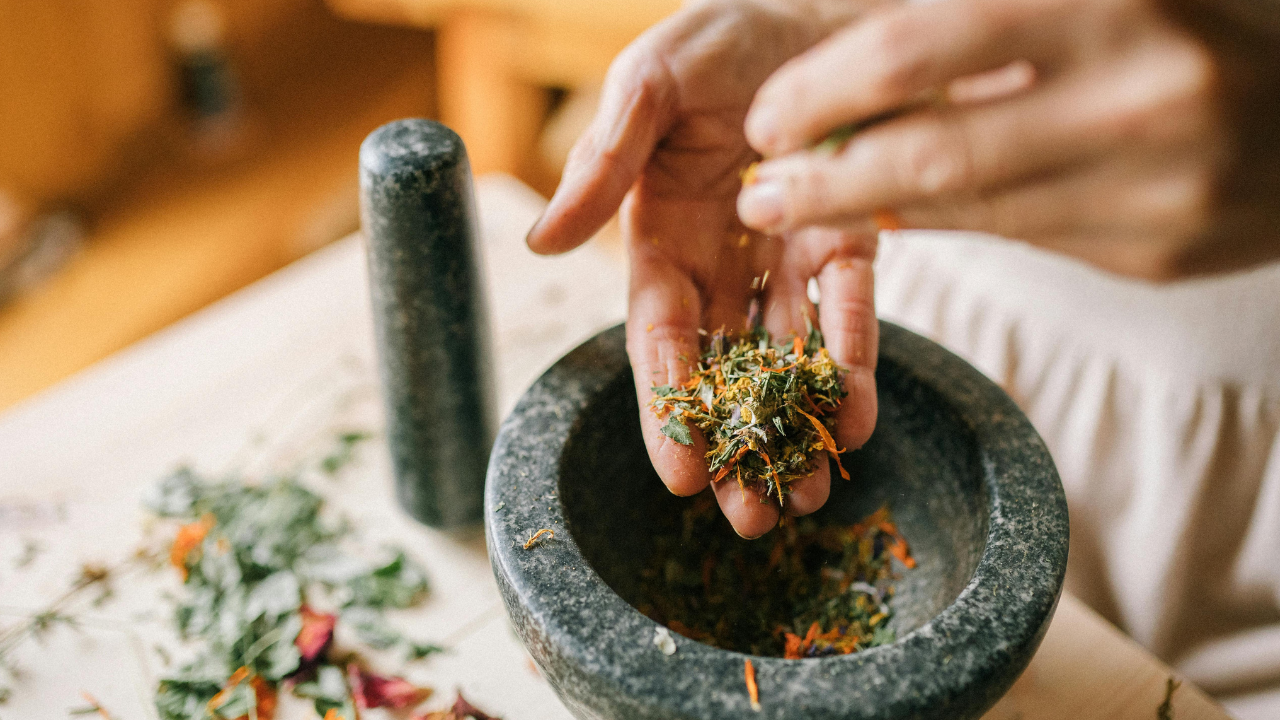
There is a romanticized image of the herbalist that runs deep in our culture: a figure moving through wild landscapes with a basket over one arm, gathering, gathering, gathering. Hands stained with walnut, pockets full of rosehips, kitchen spread with drying herbs. It is a beautiful image. It is also incomplete.
That image says nothing about what we left behind. It says nothing about the stands we walked past. It says nothing about the populations we chose not to disturb. And those choices — the ones that don’t make for pretty photographs — are where the real depth of practice lives.
Herbalism is not extractive. Or rather, it should not be. At its core, ethical plant medicine practice is relational. The plants are not a commodity. They are not a resource to be mined. They are partners in an ancient agreement, and that agreement carries obligations.
|
Your knowledge of a plant’s medicinal actions means very little if there are no plants left. Conservation is not the footnote of herbalism — it is the opening paragraph.
|
What We Are Losing — and Why
United Plant Savers maintains a list of at-risk medicinal plants native to North America. If you have never sat with that list, I encourage you to do so. Many of our most beloved, most-used, most-studied herbs are on it: goldenseal, black cohosh, American ginseng, bloodroot, trillium, wild sarsaparilla, slippery elm.
These plants are in decline not only because of habitat destruction — though that is real and significant — but because of harvesting pressure. Often from people who love them. Who have studied them. Who believe in their medicine. And who did not stop to count the colony before they gathered.
This is not about blame. I have made my own mistakes in this work. But it is a call to grow our practice to match our understanding. If you know that goldenseal is slow to reproduce, that it takes years to establish in the wild, that it is already disappearing from its native range — then that knowledge comes with responsibility. It is not enough to simply know the plant. We must know its context.
Practical Conservation in Your Herbal Practice
What does this look like day to day? Here is where I have landed after nearly thirty years in this work:
- Visit before you harvest. Spend time with a plant stand across seasons before you ever gather from it. Learn its population size, its health, its companion plants. You cannot make good decisions with limited information.
- Know the list. Keep the United Plant Savers at-risk species list somewhere accessible in your practice. For any herb on that list, raise the bar significantly before wildcrafting.
- Grow what you love most. If you use an herb regularly, grow it. A kitchen garden full of holy basil, lemon balm, calendula, and chamomile is not just convenient — it is an act of conservation. Every plant you grow is one you don’t need to wild-harvest.
- Source with discernment. When you do purchase herbs rather than grow or forage them, choose suppliers who can tell you where the herb came from and how it was harvested or cultivated. Ask questions. The market responds to consumer values.
- Participate in habitat restoration. Plant natives. Support land trusts. Join your regional United Plant Savers chapter if there is one. Contribute to the ecosystems that sustain the plants that sustain us.
- Teach this to your students from day one. Conservation literacy is not an advanced topic. It is foundational. At Heart of Herbs, we embed it across the curriculum because an herbalist who graduates without it is not yet fully equipped to practice.
Reciprocity as a Root Practice
Many Indigenous plant traditions hold the relationship between humans and plants as a covenant — one that requires ongoing tending, gratitude, and reciprocity. You don’t just take. You ask. You thank. You give back. You tend.
Modern herbalism is in the process of reclaiming this understanding, and I believe that is one of the most important things happening in our field right now. We are slowly, collectively, remembering that the plants are not here to serve us. We are in relationship with them. And like any meaningful relationship, it asks something of us.
Sometimes what it asks is restraint. Sometimes it asks us to walk past that beautiful goldenseal colony and go home empty-handed. Sometimes it asks us to grow our own, buy from a trusted cultivator, use less, or simply sit with a plant without taking anything from it at all.
That kind of presence — unhurried, non-extractive, genuinely attentive — is where deep plant knowledge actually lives. It is where the relationship deepens. And in a very real sense, it is where the healing begins.
|
The herbalist who knows when not to harvest is practicing the highest form of plant medicine: listening.
|
A Word to Students
If you are new to herbal studies, let this be one of the first things you carry: conservation is not a constraint on your practice. It is the practice.
The most gifted herbalist I know is not the one with the fullest apothecary. It is the one who knows her local plant communities with such intimacy that she can read population health at a glance, who contributes more to her local ecosystems than she takes from them, and who sees the protection of wild plant populations as one of her central responsibilities as a practitioner.
That is the standard worth growing toward. Not just for the plants — though they deserve it. But for the integrity of this practice, and for every healer who will come after us.
|
Resources & Further Study
Questions about enrollment? Contact us at [email protected] or call 866-303-4372. Use code MULTI20 for 20% off multiple courses.
|

Disclaimer
Disclaimer Blog
The information presented on the Heart of Herbs Herbal School/Demetria Clark websites is for educational purposes only. Heart of Herbs Herbal School/Demetria Clark Education LLC makes neither medical claims nor intends to diagnose or treat medical conditions. Links to external sites are for informational purposes only. Heart of Herbs Herbal School/Demetria Clark neither endorses them nor is in any way responsible for their content. Readers must do their own research regarding the safety and usage of any herbs, recipes, or supplements.