By: Jacob Clark- Field and Preparedness Team
First things first: why the proper equipment actually matters, and when it isn’t necessary.
If you’re going on a quick hour hike, especially on a well-traveled trail, you don’t need anything special on the equipment front. But if you’re doing a several-mile, several-hour hike, then you’ll need to begin to consider what you bring.
The correct equipment can be the difference between an enjoyable hike and a miserable outing. It can also, in a worst-case scenario, be the difference between coming home safely and under your own power and needing to be rescued.
This article isn’t the end-all, be-all of equipment lists, and it isn’t the only resource out there, but it will hopefully be a good introductory list and reference.
Safety is Your Best Friend
Know before you go
The first thing you need to know is where you’re going to be hiking and heading out from. There’s plenty of ways to find good trails; one of the best and most straightforward is your state’s National Park Service website. This will typically contain an address to find the trailhead, maps and routes for the trail, and contact information for the local park rangers.
Once you’ve got an idea of where you’re going, you need to know when and what the weather conditions will be. These two factors will be big factors in what you’ll need to bring.
If you’re going in the cooler months, you need to ensure you stay warm, and conversely, if you’re going in the warmer months, you’ll want to ensure you keep cool. If there’s going to be rain during your hike, you’ll want a way to keep yourself and your equipment from getting sopping wet.
The basic go-to’s
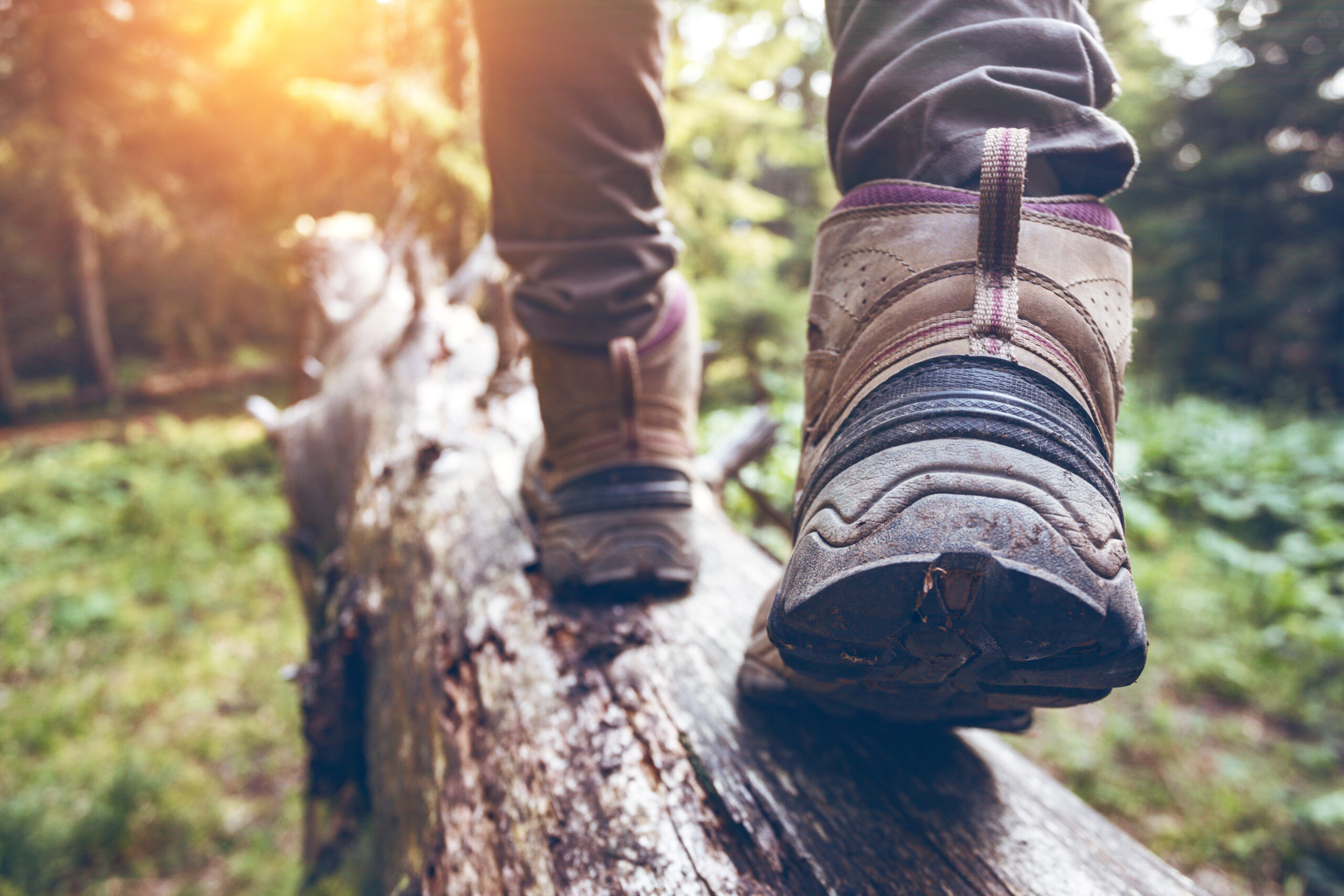
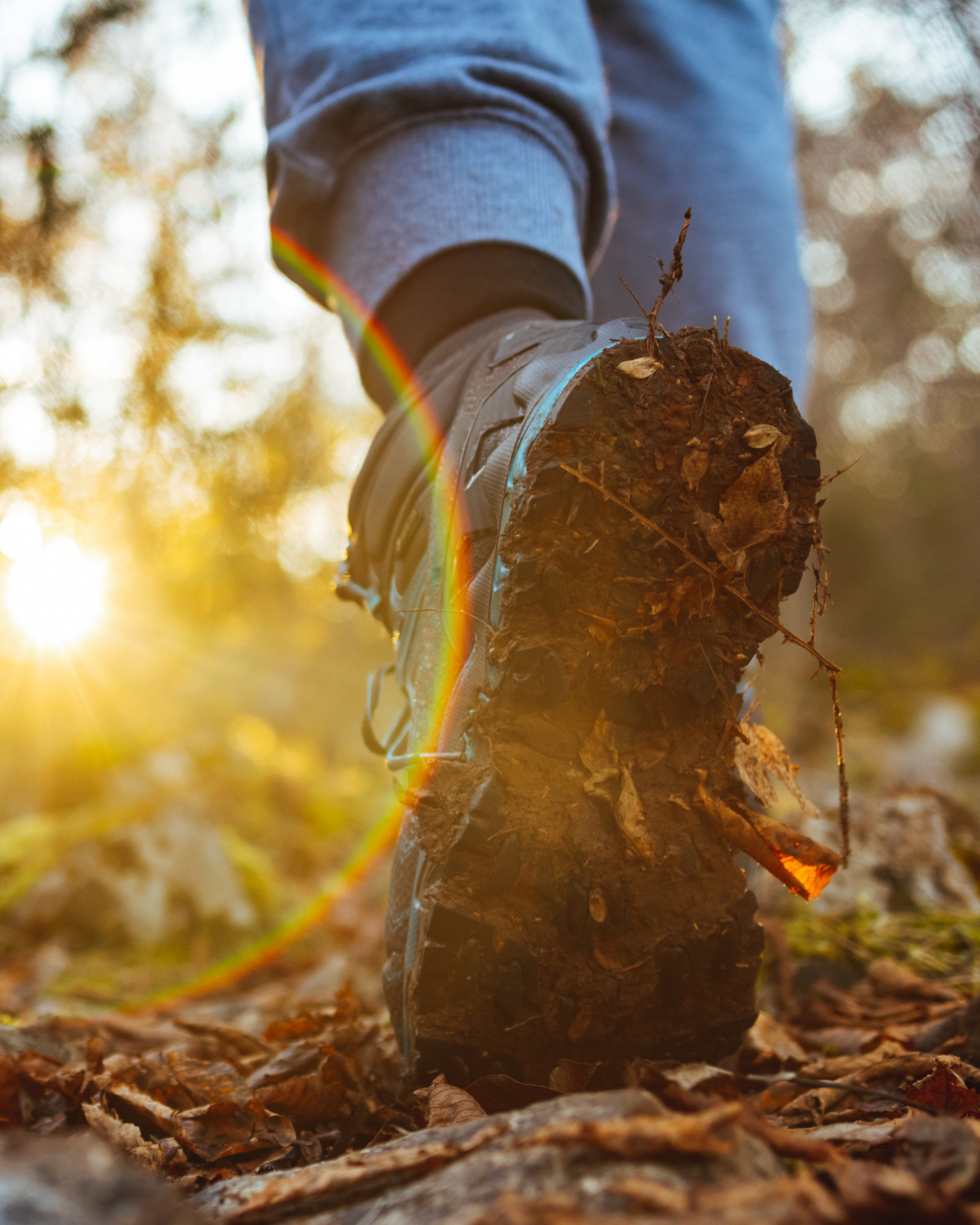
Typically, the most important piece of equipment you’ll need is a pair of good, reliable, comfortable hiking boots. When you first get a pair of hiking boots, it’s recommended that you start breaking them in before you make any longer hikes. The breaking-in process can be done on the trail, but can also be started at home; simply by wearing them around the house, to the grocery store, or anywhere else life takes you. A lot of people opt for over-the-ankle style boots to ensure there is ample ankle support; this can be especially important on uneven terrain, be it mountainous or just rocky. A two-mile return to the car isn’t bad, but it can be terrible on a badly twisted ankle.
Socks Make the Difference
After boots, another very important piece of equipment is a good pair of socks, especially moisture-wicking socks. Wool is excellent for this, yes, even in the warmer summer months! Wool socks help keep your feet comfortable and dry! Cotton is usually one that should be avoided; this is because moisture from your body or the environment will cling to the cotton, and you’ll end up with damp, uncomfortable socks. Over time, damp socks in boots will lead to blisters.
Water is Life
The most important non-worn item is a water system. Be it a water bottle, a hydration pack, or something in between, ensuring you have enough water and can easily carry it is extremely vital. Remember that a woman who weighs 170lb typically needs to consume roughly six to eleven ounces of water per mile of hiking – depending on the weather conditions. If it’s cooler, you can typically drink less; if it’s hot, you’ll need more. Of course, as with most things, this will be individual-dependent; a man who weighs more will also need more water more often. There are calculators to help identify how much you need.
First Aid
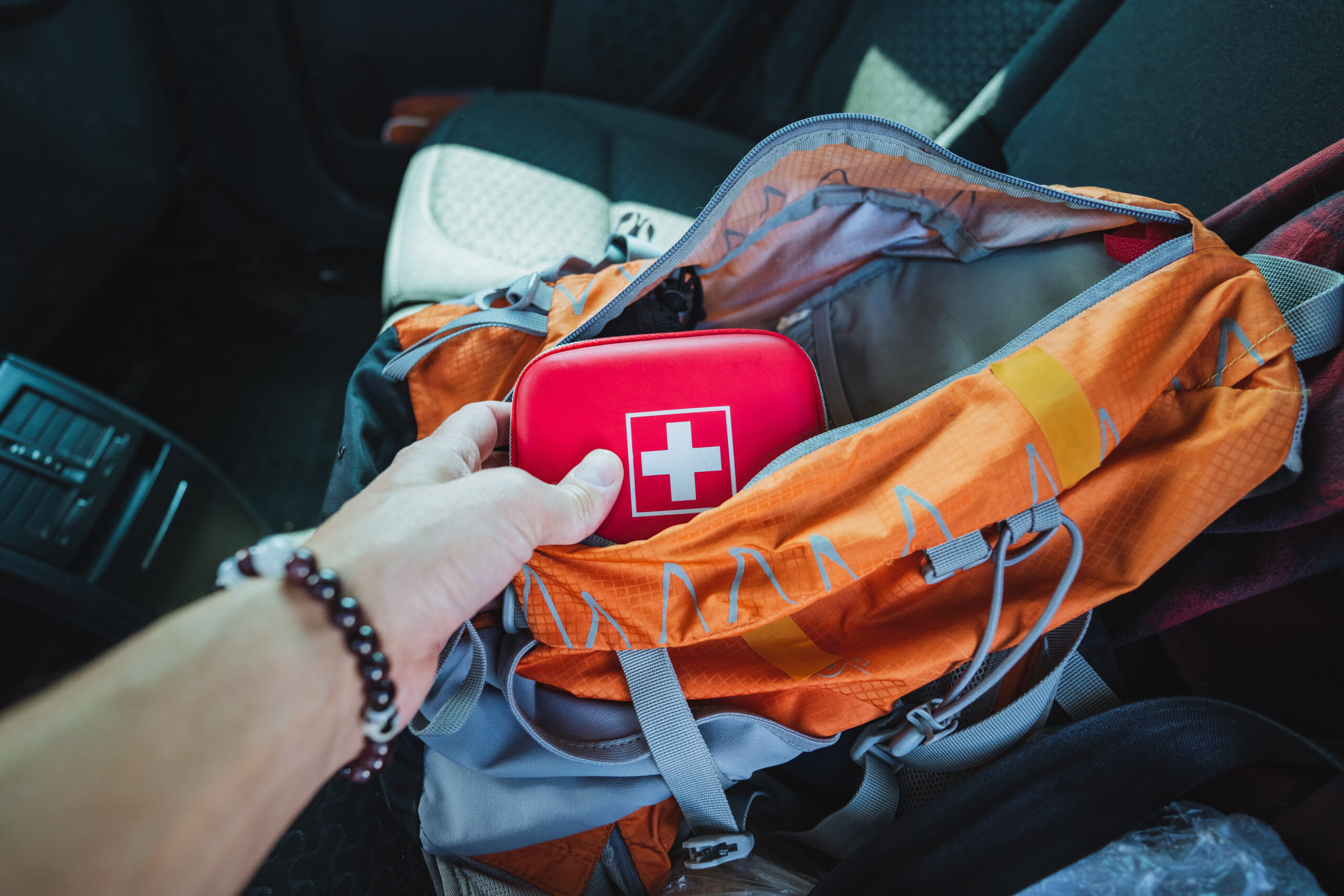
Finally, the last (but not least!) item that should always be brought when hitting the trail, the first aid kit. It doesn’t need to be an all-encompassing first aid kit, but it should have the necessities. Bandaids, neosporin. Some other items that you could bring depending on how comfortable you are with your first aid skills. You can even bring your favorite herbals.
Getting more into the weeds – or out
Clothing will be very climate-dependent, but a good rule of thumb is layering. Start with good moisture-wicking base layers; if it’s chilly, this can also be an insulating layer, and then build out from there. If it isn’t too hot, maybe just moisture-wicking undergarments, then a pair of shorts and a t-shirt. If it’s a bit colder, maybe trade the shorts and t-shirt for a pair of trekking pants and a longer-sleeve shirt. If you can, an emergency poncho isn’t a bad idea. Especially in conditions where it isn’t chilly enough to wear a raincoat all day, but when it starts raining hard you don’t want to be stuck getting soaked.
Sunscreen
Sunscreen can also keep a good, fun hike from becoming a miserable day. Nobody likes getting a sunburn, but this is often one of those forgotten items. Just because you’re in the woods doesn’t mean you can’t get sunburnt!
On the note of sprays and things to keep you from being miserable, bug spray. This is crucial to avoid spider bites, tick bites, and mosquito bites.
I typically try to bring a snack of some kind (especially a carbohydrate-heavy one) if I’m going to be going out for more than three miles. If it’s going to be a longer all-day hike, some kind of lunch is usually advisable too. Easy solutions are granola, nut medleys, freeze-dried fruits, prepackaged hiking meals, or if you’re feeling froggy, an MRE.
Being known
Ensure that family and/or friends know where you’re going, when you’ll be going, when to expect you back, and what to do if you’re not back. Location sharing through your phone or smartwatch is another good consideration.
Have a timeline, and if you expect to be back at 4 pm, let your family know, and if you’re not, they need to start sounding the alarm.
If there’s a ranger station at the trailhead, signing in and out can also let the local park rangers know you’ve gone onto the trail and also that you’ve gotten out safely.
Disclaimer
Disclaimer Blog
The information presented on the Heart of Herbs Herbal School/Demetria Clark websites is for educational purposes only. Heart of Herbs Herbal School/Demetria Clark Education LLC makes neither medical claims nor intends to diagnose or treat medical conditions. Links to external sites are for informational purposes only. Heart of Herbs Herbal School/Demetria Clark neither endorses them nor is in any way responsible for their content. Readers must do their own research regarding the safety and usage of any herbs, recipes, or supplements.
Affiliate Disclosure
Some posts contain affiliate links. When you click on these and make a purchase the cost is the same for you, but we earn a small commission that helps me to provide scholarships to students. We only promote products that we know our clients have liked themselves.
Heart of Herbs Herbal School is a Amazon affiliate. As an Amazon Associate, we earn from qualifying purchases.