Henbit (Lamium amplexicaule)
Henbit (Lamium amplexicaule) is one of those humble little weeds that most people pull without a second thought — but it has a surprisingly rich history and a solid nutritional and medicinal profile.
What It Is
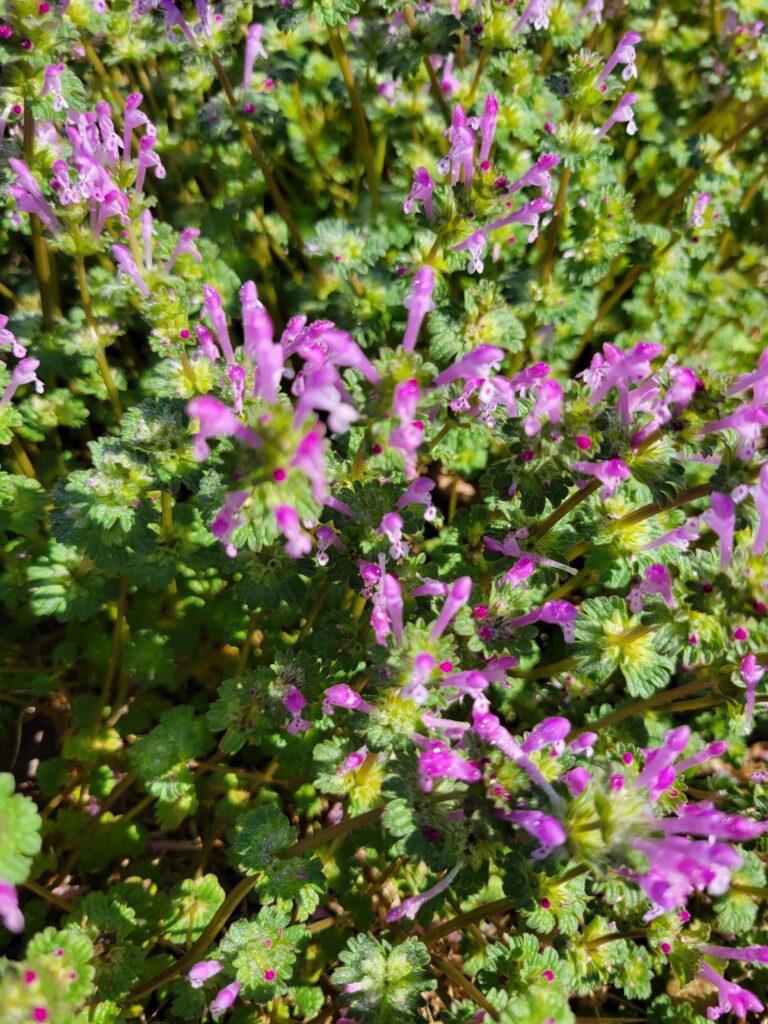
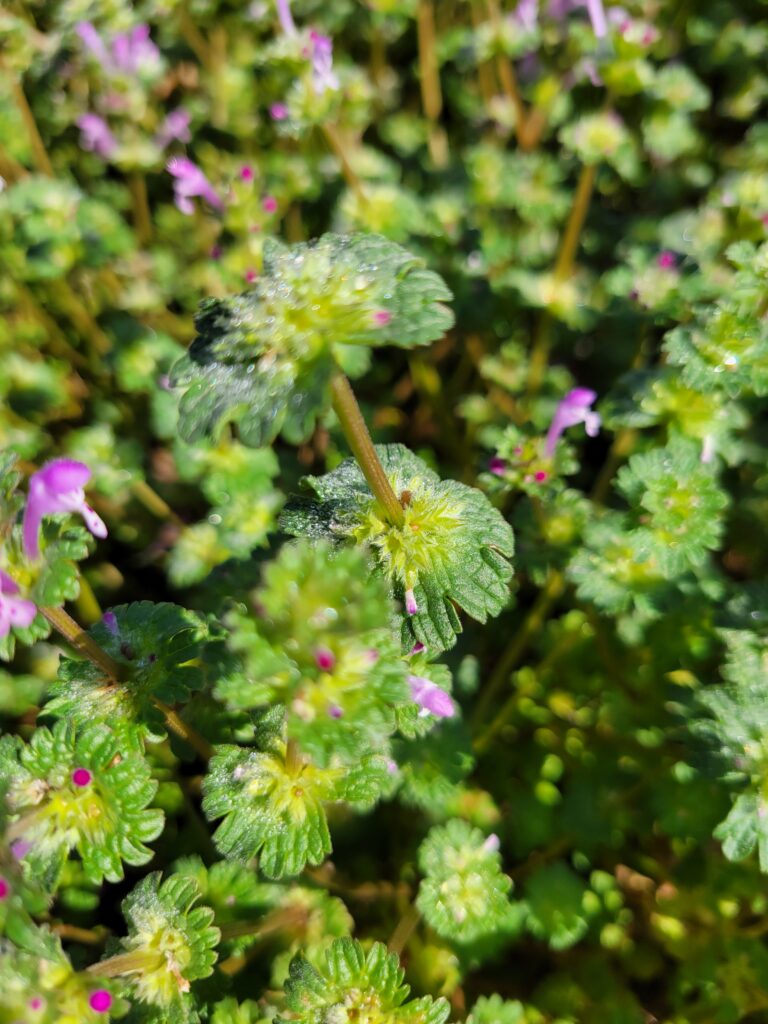
Henbit is a member of the mint family (Lamiaceae) and is one of the earliest spring bloomers, often appearing alongside chickweed and purple dead nettle before most other plants wake up. It’s native to Europe, Asia, and North Africa but naturalized across North America and now grows just about everywhere — lawns, gardens, roadsides, and disturbed soil. The small purple-pink tubular flowers and scalloped leaves make it fairly easy to identify.
Historical Uses of Henbit
Henbit has been used as a food plant across many cultures for centuries. In parts of Asia, particularly Japan and Korea, it is eaten as a spring green. It is one of the traditional seven spring herbs (nanakusa) used in a rice porridge eaten on January 7th to bring health in the new year, though some sources use the closely related dead nettle interchangeably in this tradition. In Europe, it was consumed as a pot herb and foraged as an early spring food when little else was available. It was considered a plant of abundance and nourishment after a long winter, which is fitting given how early it emerges.
In folk medicine traditions, it was used to induce sweating to break fevers, as a mild pain reliever, and to treat rheumatic complaints. Some traditional applications included using it as a poultice for mild skin irritation.
Nutritional Value
Henbit is genuinely nutritious. It contains vitamins A, C, and K, as well as iron, calcium, and fiber. As a spring green, it would have been a valuable early source of nutrients after a winter with limited fresh vegetables, which helps explain why foragers and traditional communities valued it so highly. The young leaves and flowers are both edible, with a mild flavor that is slightly earthy and faintly minty, fitting for a mint family plant.
Medicinal Properties
Henbit contains iridoids, flavonoids, phenylpropanoids, and phytosterols. Traditionally and in more recent research, it has been associated with anti-inflammatory, antioxidant, antifungal, and mild analgesic properties. Some research has examined its flavonoid content in relation to immune support, though it has not been as heavily studied as more prominent medicinal herbs.
It was used in some folk traditions as a mild diaphoretic — meaning it promotes sweating — which is why it appeared in fever management. It has also been used in folk herbalism as a gentle relaxant and for mild menstrual support, though these uses are not strongly documented clinically.
As a Foraging Herb
Henbit is one of the best beginner foraging plants because it is widespread, easy to identify, and safe. The whole aboveground plant is edible — leaves, stems, and flowers. It can be eaten raw in salads, added to soups and stews, sautéed like any other green, or blended into pestos and green smoothies. The flowers make a pretty edible garnish. Spring is the prime time — once the weather heats up, the plant gets bitter and tough.
In the Garden
It’s worth noting for herbalists and gardeners that henbit is an important early pollinator plant. It blooms when almost nothing else does, making it a vital early food source for bees emerging in late winter and early spring. Many herbalists and foragers intentionally leave patches of it growing for this reason.
It’s a lovely example of a plant that rewards you for looking closely at what most people consider a weed.
Disclaimer
Disclaimer Blog
The information presented on the Heart of Herbs Herbal School/Demetria Clark websites is for educational purposes only. Heart of Herbs Herbal School/Demetria Clark Education LLC makes neither medical claims nor intends to diagnose or treat medical conditions. Links to external sites are for informational purposes only. Heart of Herbs Herbal School/Demetria Clark neither endorses them nor is in any way responsible for their content. Readers must do their own research regarding the safety and usage of any herbs, recipes, or supplements.
Affiliate Disclosure
Some posts contain affiliate links. When you click on these and make a purchase the cost is the same for you, but we earn a small commission that helps me to provide scholarships to students. We only promote products that we know our clients have liked themselves.
Heart of Herbs Herbal School is a Amazon affiliate. As an Amazon Associate, we earn from qualifying purchases.
