
Natural Remedies for Kids’ Colds: Herbal Teas That Actually Work
It’s 2 a.m., the humidifier is rattling, and someone small is coughing in the next room. I’ve been that parent. I’ve also been the herbalist on the other end of the phone at 2 a.m., and I can tell you the question is almost always the same: is there something gentle I can give them?
Yes. Not a cure — nothing cures a cold, herbal or pharmaceutical — but real, meaningful comfort. Herbal teas do three things well for a child with a cold: they hydrate, they soothe irritated tissue, and they help a restless body settle enough to sleep. Sleep is where the healing happens. Everything below is in service of that.
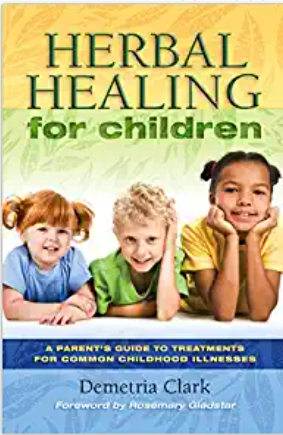
Start with what’s actually happening
A cold is a viral infection your child’s immune system is already fighting. Fever, mucus, and fatigue aren’t malfunctions — they’re the fight. The goal of a good herbal approach isn’t to shut those responses down. It’s to keep your child comfortable, hydrated, and rested while the work gets done.
That reframe changes what you reach for. Instead of suppressing, you’re supporting.
The herbs I keep in the house
Chamomile (Matricaria recutita) — The one I’d pick if I could only have one. Calming, gently anti-inflammatory, easy on small stomachs, and most kids like the taste. Skip it if your child has a known ragweed-family allergy.
Elder flower (Sambucus nigra) — The classic cold-season flower. Supports the body’s own fever and sweating response rather than fighting it. Pairs beautifully with chamomile.
Linden (Tilia spp.) — Sweet, floral, and genuinely relaxing. Wonderful for a child who is miserable and can’t wind down.
Lemon balm (Melissa officinalis) — Bright, lemony, well-studied for viral support, and reliably kid-approved.
Catnip (Nepeta cataria) — Don’t skip it because of the name. It’s one of the oldest pediatric herbs in the Western tradition, used for fussiness, restlessness, and unhappy tummies.
Thyme (Thymus vulgaris) — My go-to for a wet, rattling cough. Antispasmodic and aromatic.
Marshmallow root (Althaea officinalis) — A demulcent, meaning it coats. Nothing I know of is better for a raw, scraped-feeling sore throat.
Ginger — Warming, settling, useful when there’s nausea alongside the cold. Go light; it’s spicy to small palates.
Four recipes to start with
Use dried herbs unless noted. Steep covered — the volatile oils you want are the same ones that float off in the steam.
1. Cold Season Comfort Tea
- 1 part elderflower
- 1 part chamomile
- 1 part linden flower
Use 1 teaspoon of the blend per cup of just-boiled water. Cover, steep for 10 minutes, then strain. Sweeten if needed.
2. Thyme Cough Tea
- 1 teaspoon of dried thyme per cup
- Optional: a slice of fresh lemon
Cover, steep for 10 minutes, then strain. Give small amounts frequently rather than one large cup.
3. Sore Throat Cold Infusion
- 1 tablespoon cut-and-sifted marshmallow root
- 2 cups cool water
Combine in a jar, cap it, leave it on the counter 4 hours or overnight in the fridge. Strain. Cold water pulls the demulcent mucilage that hot water damages — this is the one tea you don’t heat. Serve cool, in sips.
4. Settle-Down Evening Tea
- 2 parts chamomile
- 1 part catnip
- 1 part lemon balm
1 teaspoon per cup, covered, 10 minutes. This is the one for the 2 a.m. wakeup.
How much, and for what age
A child is not a small adult, and dosing reflects that. The traditional herbalist’s approach scales to body size:
- Under 6 months: No herbal teas without guidance from your pediatric provider. Breast milk or formula and medical care.
- 6–12 months: Very weak tea, a teaspoon or two at a time, only with provider input. No honey before 12 months — infant botulism risk, full stop.
- 1–3 years: Weak tea, 1–2 ounces at a time, a few times a day.
- 4–8 years: Half-strength, 2–4 ounces at a time.
- 9+ years: Approaching adult strength, up to a cup at a time.
Two more cautions worth knowing: peppermint and menthol products don’t belong near the faces of infants and toddlers, and licorice root — which shows up in a lot of throat blends — shouldn’t be used long-term or with children who have blood pressure or kidney concerns.
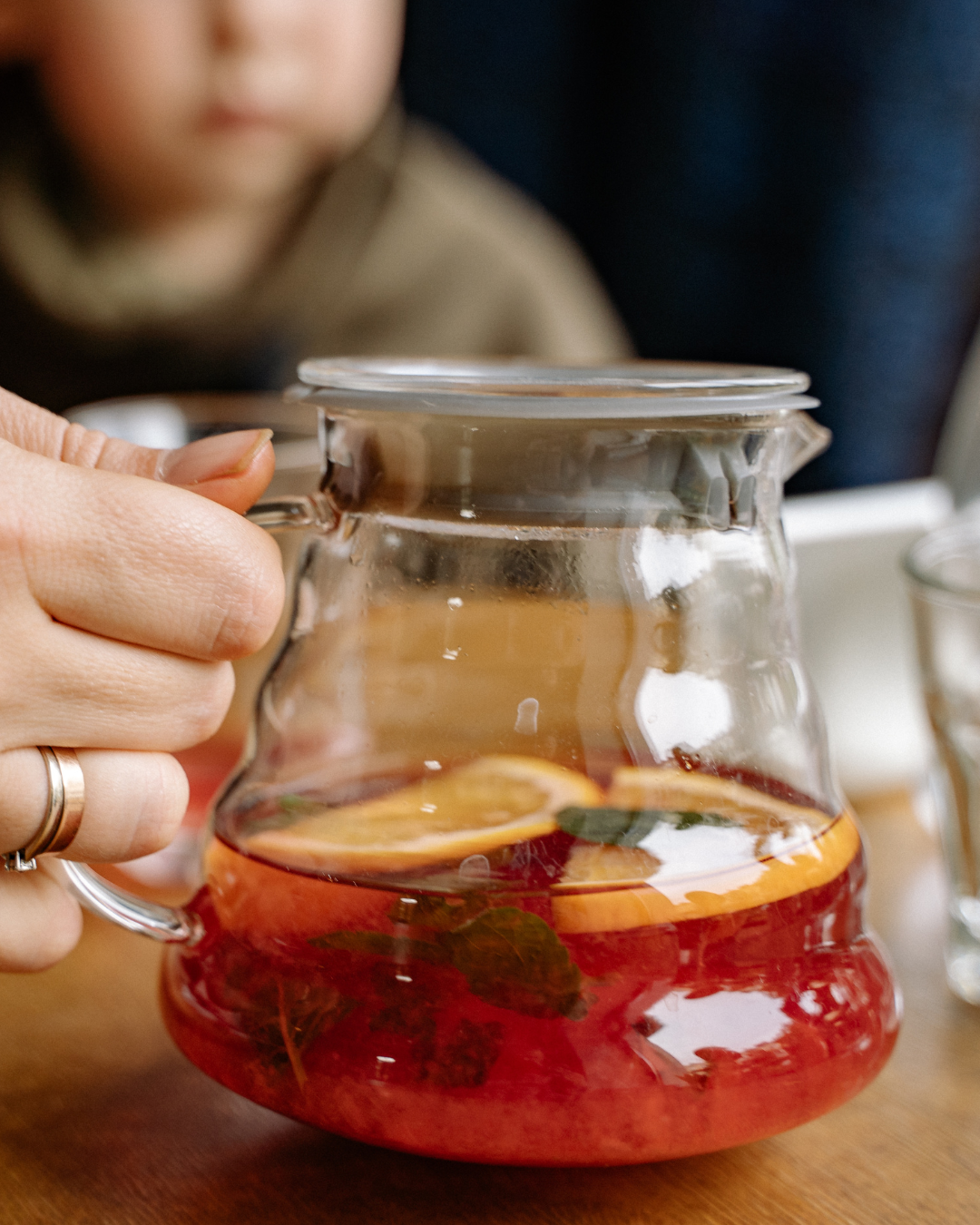
The trick nobody tells you: if your child refuses tea, freeze it into popsicles. Cold, sweet, and soothing on a sore throat, and it gets fluid into a child who won’t drink.
When tea isn’t the answer
Please call your pediatric provider — or go in — for any of these: fever in an infant under three months; labored breathing, flaring nostrils, or retractions; signs of dehydration (no wet diaper in eight hours, no tears, sunken eyes); a fever lasting more than three days or spiking after seeming to improve; unusual lethargy or a child who can’t be roused; a stiff neck; ear pain; or simply your own strong sense that something is wrong. That last one is real data. Trust it.
Herbs are for comfort care alongside good medical judgment, never instead of it.

Disclaimer
Disclaimer Blog
The information presented on the Heart of Herbs Herbal School/Demetria Clark websites is for educational purposes only. Heart of Herbs Herbal School/Demetria Clark Education LLC makes neither medical claims nor intends to diagnose or treat medical conditions. Links to external sites are for informational purposes only. Heart of Herbs Herbal School/Demetria Clark neither endorses them nor is in any way responsible for their content. Readers must do their own research regarding the safety and usage of any herbs, recipes, or supplements.